

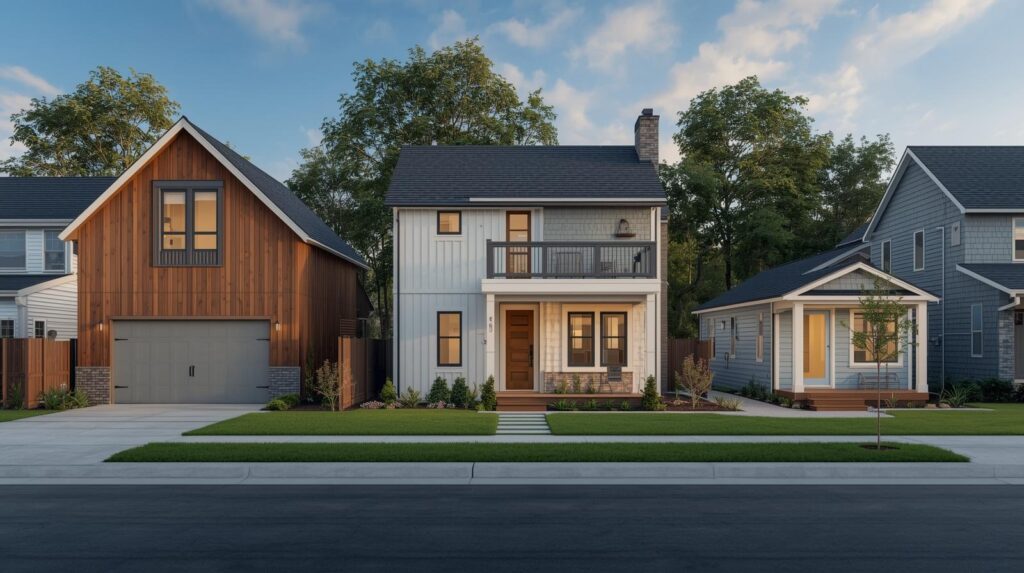
Table of Contents
- Introduction to ADUs
- Overview of ADU Types and Legal Requirements
- Types of ADUs
- Converted ADUs
- Attached ADUs
- Detached ADUs
- Junior ADUs
- Requirements of ADU and Junior ADU
- ADU vs Junior ADU: Key Differences
- Which ADU Type Is Right for Your Property?
- Common Mistakes Homeowners Make When Choosing ADU Types
- Final Thoughts
- Trust Dream Home Design & Build
- Summary of key points
- FAQ’s
Introduction to ADUs
An accessory dwelling unit, or ADU, is a small residential structure constructed on the same grounds as a primary house. ADUs may be incorporated into the house, stand-alone, or converted from converted spaces such as garages or basements. ADU has emerged as an efficient way of providing housing to the residents of California by providing an additional area of living or income to the owners of the housing. ADU construction has gained popularity more than ever with flexible designs that have increased legal support.
Why ADUs Are Popular in California and Los Angeles
AUDs are highly favored in California, particularly in Los Angeles, due to the current housing deficit and the escalating housing costs. ADUs are regarded by many homeowners as an intelligent approach to raising the value of property and providing low-cost housing. The ADU constructions have now been made easier by the state and local laws, which have shortened the permit delays and eliminated the strict parking regulations. Homeowners also find a reliable source of rental income in the ADUs in cities such as Los Angeles.
Overview of ADU Types and Legal Requirements
ADUs have various types, and every type has certain regulations established by California law. The knowledge of the various types of ADUs assists homeowners in making the right choice depending on the size of the lot, budget, and long-term objectives. The state guidelines and the local building codes collaborate to make ADUs safe and habitable.
Types of ADUs
There are four main types of ADUs approved in California. These are converted ADUs, attached ADUs, detached ADUs, and Junior Accessory Dwelling Units. Each of the types has a different purpose and is associated with a specific construction process and cost concerns. The decision of the proper ADU is based on the available space and the way the unit will be utilized.
Converted ADUs
An ADU that is converted is a space that is already in the property, which is converted to a living unit. This form of ADU building is usually quicker and cheaper since the primary structure is present.
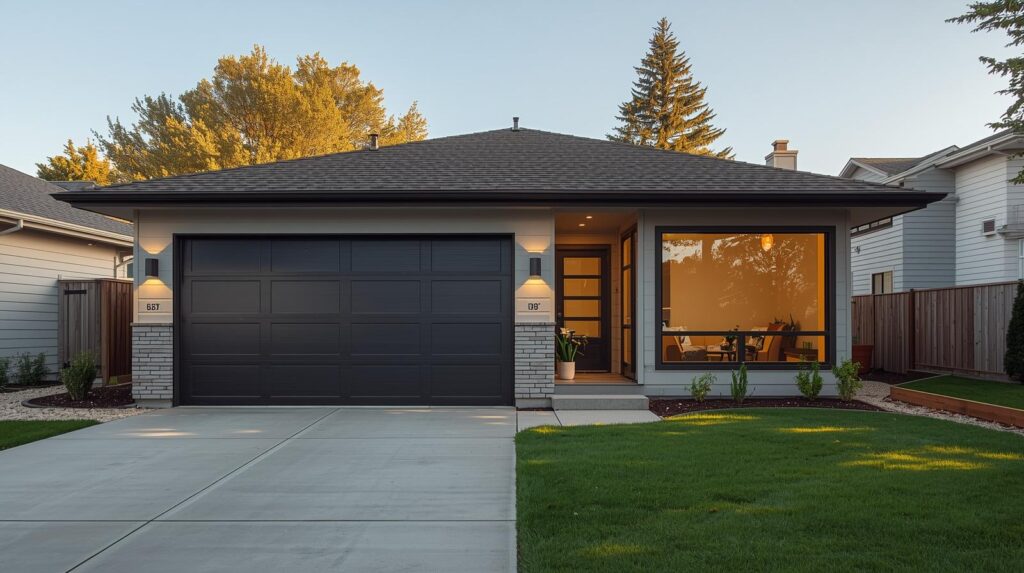
The converted ADUs are perfect for those homeowners who desire to utilize the unused spaces without any serious construction activities. An apartment converted ADU makes use of a section of the existing house or even an accessory building.
Common Conversion Spaces
ADUs are converted into garages, which are the most in-demand places in Los Angeles. Also commonly used are basements, attics, and storage rooms. These areas are already included in the property, and hence, they are appropriate for speedy ADU building.
Pros and Limitations
The converted ADUs are typically cheaper compared to the detached ADUs. They can, however, be limited in size and design. Some conversions may also suffer as a result of ceiling height and natural light.
Ideal Use Cases for Converted ADUs
Rental units, home offices, or housing family members are all good applications of converted ADUs. They suit most well those homeowners who desire an affordable ADU alternative.
Attached ADUs
An ADU is an attached house constructed as a continuation of the original house. It even shares a wall with the main residence but has an independent entrance.
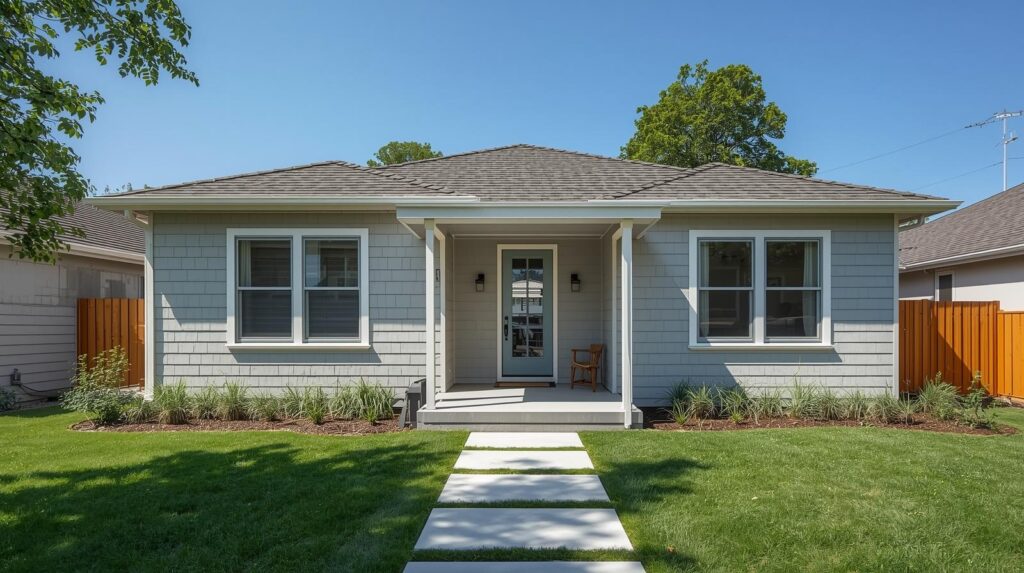
Popular are attached ADUs, which provide more space compared to conversions, at the same time reducing the construction expenses.
Attached ADUs Connect to the Main Home
Attached ADUs are new standalone structures that are attached to the main house. They are self-contained living units that have a kitchen, bathrooms, and bedrooms. Such units are linked together with the help of a common wall, yet they have distinct access. This gives it privacy and makes the structure one.
Space, Design, and Access Considerations
Attached ADUs must be well planned to fit the home design in place. Your doorways, soundproofing, and utility connection are critical aspects.
When an Attached ADU Makes Sense
Attached ADUs are suitable for those who have a growing family or homeowners who intend to use them on a long-term basis as a rental house.
Detached ADUs
A detached ADU is another structure found on the same property as the primary house. It is the most privacy-giving and flexible one, which is why it is a favorite in regard to rental properties.
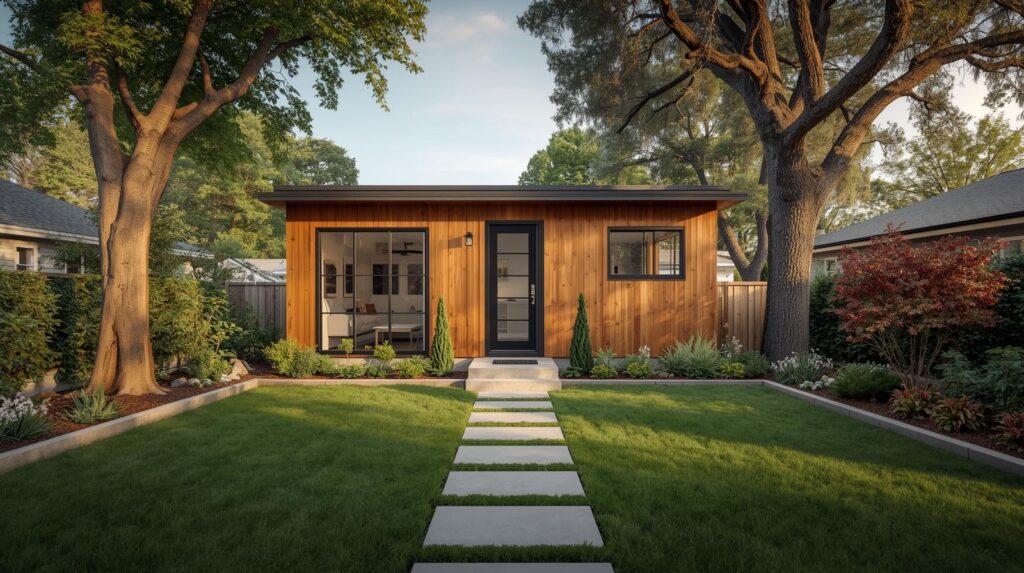
Detached ADUs consist of separate units that do not have common walls. They serve as miniature houses.
Size, Privacy, and Rental Advantages
Detached ADUs offer greater privacy and hence appeal to renters. They also tend to add a lot of value to property.
Construction Considerations
Detached ADU construction requires more permits, utilities, and foundation work. This influences the general construction cost of adu.
Popular Detached ADU Layouts
The most widespread detached ADU designs are studio layouts and one-bedroom.
Junior ADUs
Junior Accessory Dwelling Units, or ADUs, are smaller units that are established by means of an already existing home. They are made to be efficient and economical. Junior ADUs have some common facilities with the primary home. They are less difficult to approve and build more quickly.
How Junior ADUs Differ from Standard ADUs
An ADU is a completely separate, self-contained living space. JADUs are more intertwined with the primary residence, sharing bathrooms and certain utilities. Unlike standard ADUs, JADUs do not require a full kitchen or separate bathroom.
Typical Size and Layout
The juniors’ ADUs are typically less than 500 square feet and have a bedroom, a small kitchen, and an individual entrance.
When Homeowners Choose a Junior ADU
A Junior ADU is affordable, requires minimal construction, and is efficient in the use of available space, which is why homeowners prefer it. It transforms spaces such as garages or bedrooms into semi-autonomous living rooms without changing the yard.
Homeowners can keep their family members, such as senior parents or adult children, in an ideal place without losing close contact. JADUs have lower prices and less complex and quicker permitting processes relative to detached ADUs. ADUs also have the ability to generate rental income while complying with owner-occupancy requirements. On the whole, the JADUs promote sustainability and a higher value of property with a little investment.
Requirements of ADU and Junior ADU
Before starting ADU construction, homeowners must understand the legal requirements. These rules ensure safety and compliance.
General Requirements for ADU
General regulations regarding an ADU are applicable in most American jurisdictions. Remember that the local zoning codes and state regulations may differ, and these are just some guidelines and not legal advice.
Zoning eligibility
The dwelling units known as Accessory Dwelling Units (ADUs) are usually allowed in residential-zoned property in single-family and some multi-family lots. There are areas where, before building an ADU, a primary house must already be present on the property.
Maximum size limits
ADUs are typically 600 to 1,200 sq. ft., and in several cities, the size is restricted to 1/2 the size of the primary residence. Junior ADUs are smaller (usually no larger than 500 sq. ft.
Height and setback rules
The detached ADUs are typically 16 to 25 feet high, with property line setbacks of 4-10 feet. Garage conversions, however, do not have to comply with these new setback requirements.
Parking requirements
There are regions in need of no more parking spaces for ADUs. Parking can be avoided in case the property location is close to a transportation hub or the ADU is utilizing an available building. The alternatives that are usually allowed include tandem and driveway parking.
Utility connections
ADUs may be connected to utilities of the main house or be metered. The impact fees are normally less or not paid on smaller quantities, and all the ADUs should be within local water, sewer, and electrical capacity requirements.
Fire safety and building codes
Local building codes, including fire and separation, emergency exits, minimum ceiling heights, usually seven feet, and adequate ventilation and insulation, are required of Adu to make sure the buildings are safe, comfortable, and habitable.
General Requirements for JADU
A small residential unit built into an existing or proposed single-family home is known as a Junior Accessory Dwelling Unit ( JADU ).
Maximum size allowance
ADUs have a maximum gross floor area of 500 sq. ft. and, in some local jurisdictions, there may also be a minimum size, typically about 150 sq. ft, to allow functionality and habitation.
Location within existing home
A JADU has to be constructed in the currently existing or proposed one-family dwelling or in an attached garage on a lot that has one major dwelling. It must not be a completely detached, isolated structure, so it cannot be a part of the main house.
Efficient kitchen rules
A JADU should have an efficient kitchen with an appliance, a food preparation counter, a sink, and storage. Bathrooms may be independent or communal with the main house, which will take into account basic requirements of cooking and sanitation.
Owner-occupancy requirement
Several locations demand that the owner of the property reside in JADU or the main house, but the state laws may vary. JADUs are typically unmarketable on their own but can be leased on a long-term basis.
Parking exemptions
The JADUs do not normally need extra parking space beyond that of the main house. Yet, in case a garage becomes a JADU, certain local codes can enforce the change to a parking place.
ADU vs Junior ADU: Key Differences
ADUs and Junior ADUs differ in size, cost, and rental potential. Standard ADUs offer more independence, while JADUs are more affordable and easier to build.
| Feature | ADU (Accessory Dwelling Unit) | JADU (Junior Accessory Dwelling Unit) |
| Size | 400 – 1,200+ sq ft | 150 – 500 sq ft |
| Kitchen & Bathroom | Full kitchen and bathroom | Often, a kitchenette may share a bathroom or utilities with the main house |
| Cost | $150,000 – $400,000+ | $50,000 – $150,000 |
| Rental Potential | High; fully independent unit | Limited; suitable for single tenants or family use |
| Approval Process | Formal permitting, zoning, and parking compliance | Easier, often conversion of existing space with minimal permits |
| Best Use Cases | Rental income, guest housing, multi-generational living | Downsizing, home office/studio, housing elderly parents |
Which ADU Type Is Right for Your Property?
Accessory Dwelling Units (ADUs) are a trend among people wishing to add value to their property, generate some rent, or house relatives. However, the ADU type to be adopted is determined by various factors.
Factors to consider (lot size, budget, rental goals)
The kind of ADU that should be placed on your property will be determined by the size and structure of the property. Detached ADUs are independent units that are perfect for bigger lots in that they provide privacy at a higher price. The attached ADUs are connected by a wall, which saves on costs. Conversion of garages, basements, or attics makes the most out of the available area, and it can be less expensive.
Privacy vs affordability
It is important to consider the users of the ADU and the degree of privacy required. Isolated ADUs are independent and earn greater rent. Additional units or conversions are attached to family members whose utilities are shared, thus cutting down on the costs. Strike a balance between financial objectives and occupancy comfort, and lifestyle.
Long-term investment vs family use
There are many ways of using ADUs depending on your long-term interests. In the case of rental, the detached units are more privacy-giving and have a better yield. Attached or interior conversions are convenient and easy to access for the family. Good ADUs have the ability to alternate uses, and this contributes to flexibility. The correct type selection between lot size, budget, privacy, and objectives creates comfort, versatility, and potential resale value.
Common Mistakes Homeowners Make When Choosing ADU Types
ADUs may provide value and income, and flexibility to your place, but only if you think it through. There are numerous mistakes that can be avoided and result in the waste of money, stress, or disability for many homeowners.
Picking the wrong ADU type for the lot
One of the mistakes is choosing an ADU type option that does not match the size of the property, layout, or zoning of the property. As an illustration, a detached ADU on a tiny piece of land or an inappropriate garage conversion may cause some delays, additional expenses, or rejection by the city. In order to prevent this, calculate your lot, check setbacks and coverage regulations, and visit a designer or an architect to help determine whether it is feasible.
Underestimating permit requirements
Smaller ADUs require permits, inspections, and approvals. Failure to comply with them because of time or money saving may cause legal complications, fines, resale, or even demolition. To prevent it, consider the expenses of permits and timeframes, and collaborate with contractors who can work with the local laws.
Ignoring future rental goals
ADUs can also be constructed by homeowners without the long-term perspective, which restricts the future choices- a family-oriented unit may not find suitors in the future, and vice versa. To prevent this, be able to design the ADU so that it can be flexible and which can be used as a rental, office, guest suite, or in-law unit in the long run.
Final Thoughts
Accessory Dwelling Units or ADUs and the Junior ADUs or JADUs, are viable ways in which California homeowners can solve housing deficits, improve the value of their property, and earn a rental income. Homeowners have a variety of options that fit their property, budget, and lifestyle because there are flexible designs and different types that include converted, attached, detached, and junior types.
When selecting the ADU, it is important to consider the lot size, privacy, budget, and long-term objectives. In order to make the process smooth, legal, and build a high-quality, functional unit, it is suggested that the homeowners seek the services of a professional such as Dream Home Design & Build, since it can lead the entire process, starting with the planning and ending with the construction.
Trust Dream Home Design & Build
Dream Home Design & Build is a well-known company in the ADU construction within California. Our team has finished several successful ADU projects, and these include detached ADUs, garage conversions, and custom attached units.

We deal with design, permits, and construction, thus making it stress-free and easy. Look at our past projects and understand how we transform ideas into reality.
Summary of Key Points
ADUs offer accommodating housing in California. Being aware of the variation of the constructed, attached, detached, and Junior ADUs will result in successful construction planning.
FAQ’s
What does ADU mean?
ADU stands for accessory dwelling unit, a small living space built on a residential property.
What is the cheapest option for an ADU?
Converted ADUs are usually the most affordable option.
What is the ADU construction cost per square foot?
The average adu construction cost per square foot ranges depending on design and location.
What is detached ADU cost?
Detached ADUs cost more due to separate construction and utilities.
Will California pay you to build an ADU?
California offers grants and incentives, but programs vary by location.